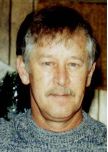
Worked for Labadees as a welder. Worked with construction company with Patrick. Chet was a welder, my dad, pat was a welders helper. Chet was a welder mostly. He thinks he caught his lung cancer while working for Vulcan Mold, due to asbestos. He decided to become a cop when he was in his 20's. Uncle Chet was a Trenton, MI. Police Officer Lieutenant, who also dabbled in Real Estate part time to earn extra money. He was shot in the chest but survived to a desk until he retired. He was a police officer for about 27 years. He died of lung cancer at Riverside Hospital. He was also in the Air Force before becoming a Police Officer.
This is from the newspaper when he retired:
Police Lt. Chester Mexico retired after more than 27 years on the job fighting the bad guys. But instead of relaxing he will face the toughest fight of his life as he takes on a rare form of lung cancer. The battle will soon take Mexico to Maryland where cancer researchers offer a ray of hope. Mexico, 59, has a rare form of lung cancer called mesothelioma, which has a low cure rate. Still that's one step up from a previous incorrect diagnosis that gave him no chance at all. His doctors advised him to seek treatment at the National Cancer Institute in Bethesda, MD., where researchers appear to be making progress. Mexico hung up his badge Friday afternoon, ending a career that began in 1967. "At the time, there were not a lot of jobs out there," he said, "And being honest, it wasn't because I wanted to do good for my country or my city, I had already done that by spending six years in the service. I wanted a job that I wouldn't be laid off from every other year." Mexico said he chose to work in Trenton, where he was raised, because he liked living here. "I always liked helping kids although I was never in a program strictly working with kids," Mexico said, recalling on encounter with a 2-year old desperado. "I was on the road one night. It was around 6am and I was on Vernon, near Harrison, and there was this little kid about 2 years old in the middle of the road in his pj's. "I was by myself, and I got out the car to ask him who he was. He put up his dukes like he was ready to fight me." Mexico recalled with a chuckle. "He had snuck out of his house and his mom didn't know." Meeting a 2-year old in the middle of the street was an extreme example, but Mexico did enjoy stopping to talk with children and adults he encountered while on patrol. "They (police supervisors and administrators) were a little more reliant with us then, and we would stop and have a Coke at a drive-in. They used to have them here, beleive it or not, and we would sit and talk to poeple. "But now they have a different idea about how to be professional in our job -- the people have changed, our job has changed." And while everything changes, facing unpleasant reality remains a constant of the police officers life. "There is on accident I will always remember. It was on Fort and Vreeland years ago," Mexico remembers. "The driver, a man, was pinned in his car and lying partially out of the door. He had two daughters in the car and hald their faces were gone. They were dead, but he couldn't see them. "I held his head in my hands. He was choking on his blood. I kept asking about his daughters. I told him they were OK. "I will never forget it. I had to hold his head so long, and I knew his daughters were dead. That was before we had ambulances here and you'd have to wait sometimes 15, 20, 30 minutes for an ambulance to come. It's much better today with the ambulance service in the city." For Mexico, the scariest calls were the alarms. "Sometimes you would catch someone when you responded to an alarm, but you were always afraid. It may be an alarm sounding, or a silent alarm. And being a police officer did not make him ammune to fear. "Sure we're police, but we're afraid when we go in. You never know what's around the corner. There's no light except the flash light you're carrying. You never know if someone is going to jump out and shoot you." And even if they don't shoot you, encounters with law breakers today often have an unpleasantness that was absent 25 years ago. "We used to be able to stop a kid who had run a stop sign and give him a warning," Mexico said. "Today if you stop a youngster to give him a warning, he wants to fight you. In 20 years things have really changed on the job. It seems like more often today parents believe a child before they believe a law enforcement officer, which creates problems for us." When Mexico started his job it was easier to give breaks, he said, because people had more respect for police officers, listened to them and would heed warnings. "In my whole career I used one ticket book," Mexico said. "Today they have standards and the guys use one a month." Mexico had standards, too, which are reflected in the honors, official and otherwise, that fatten his personnel file. That he made a good impression on the public is shown in the 28 complimentary letters he received during his career, from residents and the city. Included was a poem written by threee stranded women he assisted on the road in March 1978. He also received seven Certificates of Merit and on Departmental Citation. The Departmental Citation, the highest award the Trenton Police Department issues, was give to Mexico on Feb. 20 1985, for his owrk in identifying a burglar, which let to an arrest. The story begins with Mexico on routine patrol in November 1984 when he spotted a supspicious person in a area of the city that had numerous burglaries. He stopped and questioned the man, obtained his name, but did not have enough information for an arrest. "Something didn't seem right to me, so I waited to the next day and did a little extra work. He was involved in a lot of breaking and enterings." His exta effort helped solve more than 90 burglaries in five communities and earned Mexico the the Citation. His career continued its upward track with promotion to corporal in 1986, road sergeant in 1988 and staff sergeant in 1989. In Janrary 1994 he moved into the traffic bureau and in May he was promoted to command lieutenant in that bureau. |